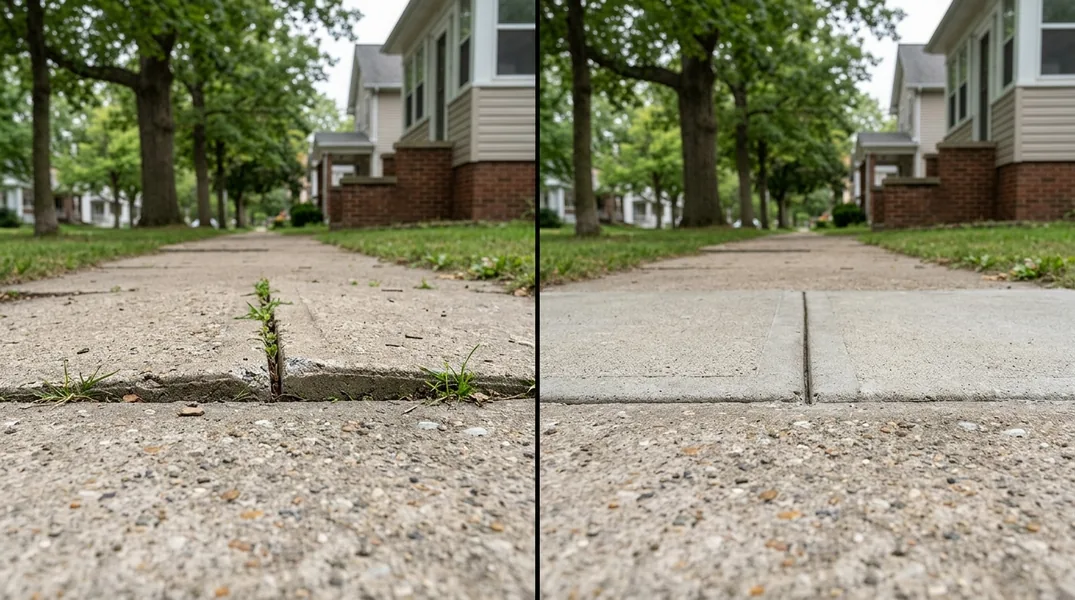
Understanding Freeze-Thaw Damage in Grand Rapids Concrete
If you own a home in Grand Rapids, you've likely noticed how harsh our winters can be on concrete surfaces. Freeze-thaw damage is one of the most common culprits behind cracked driveways, spalling sidewalks, and deteriorating patios across West Michigan. The science behind this damage is straightforward but destructive: when water seeps into tiny pores and cracks in concrete, it expands as it freezes. This expansion creates internal pressure that eventually breaks down the concrete from within.
The problem is particularly acute in our region because of how frequently our temperatures cycle around the freezing point. Unlike areas with consistently cold winters, Grand Rapids experiences repeated thaw-and-freeze cycles throughout the season. Water enters the concrete during a warm spell or rainfall, then freezes when temperatures drop again. This happens dozens of times over a single winter, and each cycle weakens the concrete a little more. After several years, you'll start seeing surface deterioration, spalling (where chunks of concrete flake off), and cracks that seem to appear overnight.
Frost Heave and Sidewalk Damage: A Seasonal Problem
Frost heave is a phenomenon that many homeowners in Wyoming and surrounding areas encounter every winter. Unlike freeze-thaw damage that happens within the concrete itself, frost heave occurs in the soil beneath your concrete. When soil moisture freezes, it expands upward, pushing your sidewalk, driveway, or patio up with it. When spring arrives and the soil thaws, the ground settles unevenly, leaving your concrete surface cracked, tilted, or broken.
The damage from frost heave is often more dramatic and sudden than freeze-thaw cracking. A sidewalk can shift several inches in a single winter, creating trip hazards and structural problems. This is why you'll notice so many uneven sidewalks and driveways throughout our region. The concrete itself may be perfectly sound, but the ground beneath it has literally moved. If you're dealing with frost heave damage, Concrete Repair & Resurfacing may be necessary to restore safety and functionality to your property.
Glacial Sand and Soil: The Hidden Challenge Beneath Your Driveway
To understand why Kentwood and the greater Grand Rapids area are so tough on concrete, you need to look at what's underneath. Our region sits on glacial deposits left behind by ice age glaciers. This glacial sand and soil composition creates unique challenges for concrete foundations and drainage. Glacial soils are often poorly draining, meaning water doesn't move away from your concrete as quickly as it should. When water sits in contact with concrete for extended periods, it accelerates all the damage mechanisms we've discussed.
The particle size and composition of glacial sand also affects how concrete performs over time. Fine glacial particles can trap water and create capillary action, which pulls moisture up into the concrete from below. This is why even well-installed concrete can develop problems if the underlying soil isn't properly prepared and managed. Proper site preparation, grading, and drainage are essential when installing new Concrete Driveways in our region. Without these precautions, even the best concrete mix will struggle against our climate and soil conditions.
Why Proper Drainage and Installation Matter in Our Climate
The combination of freeze-thaw cycles, frost heave risk, and glacial soil means that how your concrete is installed matters enormously. A driveway that's installed flat without proper slope will collect water, which is the enemy of concrete in cold climates. Water needs to drain away from your concrete surface and the soil beneath it. This means your driveway should slope slightly away from your home, and the base preparation should include proper drainage considerations.
Many homeowners don't realize that concrete installation is about far more than just pouring and finishing the surface. The base layer, sub-base preparation, and grading all play critical roles in how well your concrete will withstand Michigan winters. Professional contractors in Walker and throughout our service area understand these regional challenges and build them into every project. When you're considering new Concrete Patios or driveway installation, asking about drainage and base preparation should be part of your conversation with any contractor.
Concrete Repair in Grand Rapids: When to Call a Professional
If you're already seeing signs of damage, the good news is that not all concrete problems require complete replacement. Minor cracking and surface spalling can often be addressed through targeted Concrete Repair & Resurfacing work. However, timing matters. Small cracks can be sealed and managed before they become larger problems. Once water starts infiltrating deeper into the concrete, the damage accelerates quickly, especially in our freeze-thaw climate.
The key is not to ignore damage or assume it will go away on its own. Cracks that are only a quarter-inch wide today can become half-inch cracks by next winter if left untreated. More importantly, uneven surfaces from frost heave create safety hazards and can lead to liability issues if someone is injured on your property. If you're noticing concrete damage on your driveway, sidewalk, or patio, it's worth getting a professional assessment. Contact Grand Rapids Concrete at (616) 779-5125 or visit our website to request a free estimate and learn about your repair options.
Protecting Your Concrete Investment Year-Round
Beyond professional installation and timely repairs, there are steps you can take to protect your concrete investment. Sealing your concrete surfaces every two to three years helps prevent water infiltration, which is the root cause of most freeze-thaw damage. A good concrete sealer creates a barrier that keeps water out of the pores, significantly extending the life of your driveway or patio. This is one of the most cost-effective ways to combat damage in our climate.
You should also manage water around your concrete surfaces. Keep gutters and downspouts clean so water drains away from your home and driveway. Avoid using salt or harsh de-icers that can damage concrete and accelerate deterioration. If you do use de-icing products, choose concrete-safe options and use them sparingly. Finally, if you're planning a new concrete project or need to address existing damage, now is the time to talk with Grand Rapids Concrete about solutions designed specifically for our region's challenging climate. Call us at (616) 779-5125 to discuss your concrete needs and get started on protecting your property for years to come.
Looking for a professional concrete contractor in Grand Rapids? Grand Rapids Concrete responds fast for all your concrete needs.
Get a Free QuoteOur services: Concrete Driveways · Concrete Patios · Stamped & Decorative Concrete